

When to Say Goodbye: A Homeowner’s Guide to Tree Removal in the Midlands

Living in the Midlands of South Carolina means living under a lush canopy of oaks, pines, and pecans. Our trees provide much-needed relief from the blistering Columbia summer heat and add undeniable value to our properties. However, there comes a time in every homeowner’s journey when a tree transition from a landscape asset to a significant liability.
Deciding to remove a tree is never easy, but in our region—where localized summer thunderstorms and hurricane remnants are a seasonal reality—understanding when a tree needs to go is a vital part of home maintenance.
Identifying the Warning Signs
While some trees die gracefully over decades, others become hazardous overnight. Here are the red flags every Midlands homeowner should monitor:
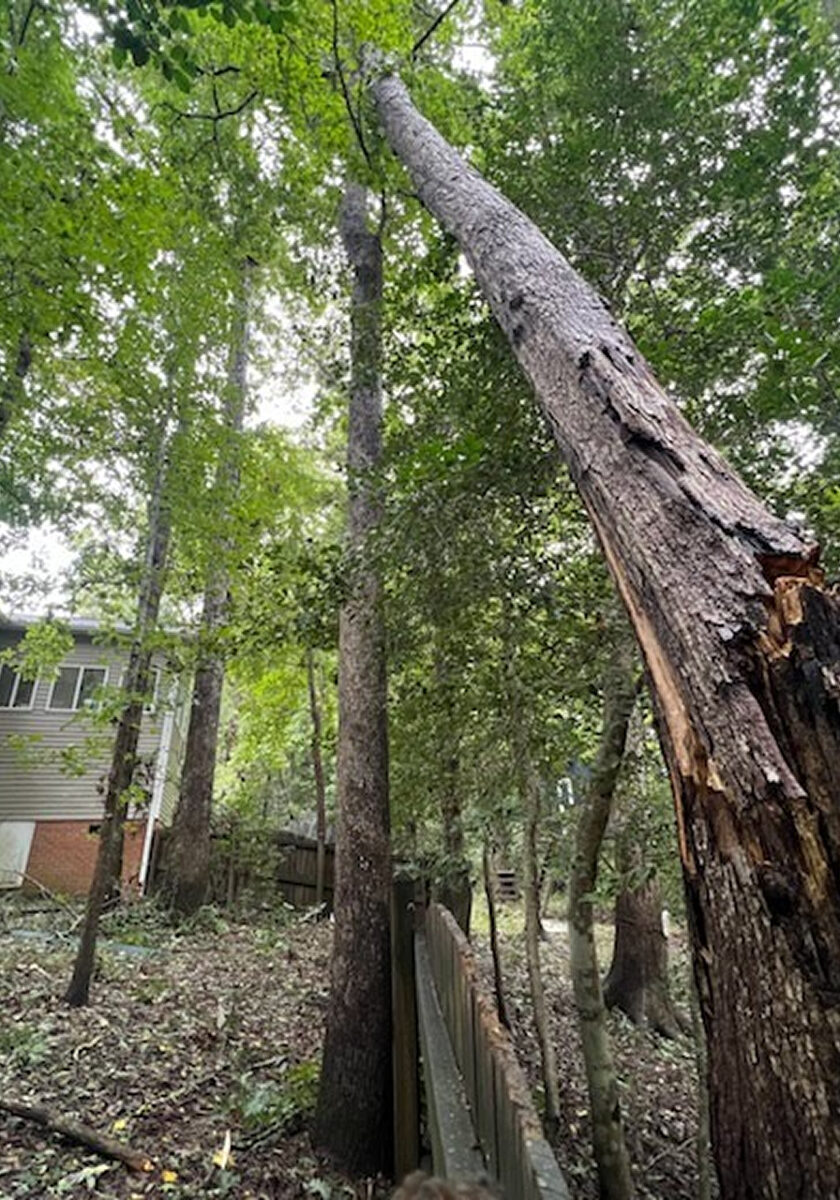
- Structural Defects and Leaning A tree that has grown at an angle its entire life is usually not a concern. However, if you notice a sudden lean or mounded soil at the base (heaving), the root system may be failing. Look for "included bark," which occurs when two trunks grow too close together, creating a weak V-shaped union that is prone to splitting during high winds.
- Internal Decay and Cavities If you see large cavities, hollow trunks, or fungal growth—like "shelf mushrooms" or conks—protruding from the bark, the tree is likely rotting from the inside out. Since trees are "self-optimizing" structures, they can look green on top while being structurally hollow at the bottom.
- The "Dead Zone" in the Canopy Look up. If more than 25% to 30% of the canopy is dead or leafing out significantly later than the rest of the tree, it is often a sign of terminal decline. In our area, "dieback" from the top down is a common symptom of root stress or soil compaction.
Why Location Matters in the Midlands
In the sandy soils of Lexington or the red clay of Richland County, root stability varies. Trees near power lines, hanging over "Lake Murray" docks, or encroaching on home foundations require special consideration. In the South Carolina heat, a dead pine can become brittle very quickly, turning into a "widowmaker" that can drop heavy limbs without warning.
The Dangers of DIY Removal
It can be tempting to grab a chainsaw and tackle a medium-sized tree yourself, but tree removal is one of the most dangerous forms of property maintenance.
- Physics is Unpredictable: A leaning tree can "chair-back" or split upward (a phenomenon called a "Barber Chair"), causing the trunk to kick back toward the operator.
- Utility Lines: Many Midlands neighborhoods have overhead power and telecommunications lines woven through the branches. Contact with these is fatal.
- Property Damage: Calculating the "drop zone" requires professional precision to avoid crushing fences, HVAC units, or your neighbor’s roof.

Post-Removal: Stumps and Replacements
Once a tree is down, you aren't quite finished. Leaving a stump can attract termites and carpenter ants—pests we desperately want to keep away from our South Carolina homes. Stump grinding is the preferred method to clear the way for a new, healthier replacement tree.
Consult a Professional
Don't play a guessing game with the safety of your home. If you are unsure whether a tree can be saved through pruning and cabling or if it needs to be completely removed, it is time to call in the experts.
We highly recommend seeking out a Certified Arborist or a Plant Health Care expert. They can perform a professional risk assessment and provide a clear plan to keep your family and your property safe.
Search
Recent Posts

Drive through almost any neighborhood in the Midlands of South Carolina, and you’re greeted…

As the vibrant greens of summer give way to the warm hues of autumn,…

If you’ve spent a spring afternoon in your Midlands garden, you might have noticed…

When fall arrives in the Midlands of South Carolina, we don’t always get the…

If you’ve ever stepped out of your house in Columbia during a humid July…