

The Majestic Oak: A Homeowner’s Guide

In the Midlands of South Carolina, few things define our landscape like the mighty oak. From the historic canopy of Columbia’s shade trees to the sprawling giants in Lexington backyards, oaks are more than just plants—they are a legacy. For homeowners, these trees provide invaluable benefits: they slash summer cooling costs, stabilize our sandy soils, and support hundreds of local bird and butterfly species.
However, owning a mature oak comes with a responsibility to understand its unique needs and the local threats it faces.
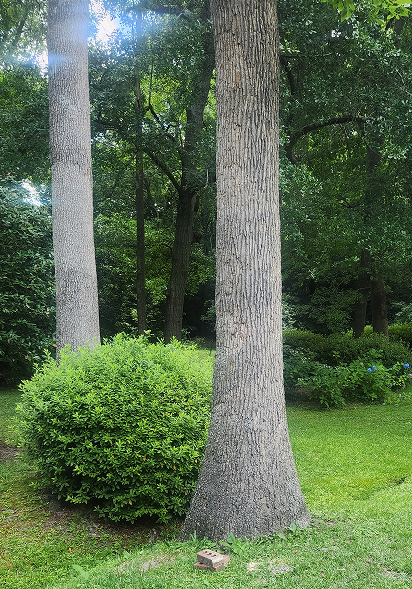
Common Oaks in Our Neighborhoods
While South Carolina is home to over a dozen oak species, Midlands homeowners typically encounter these three:
- Willow Oak (Quercus phellos): Recognizable by its narrow, willow-like leaves, this is a favorite for streetscapes. It’s fast-growing and provides a dense, fine-textured shade.
- Water Oak (Quercus nigra): Very common but notoriously short-lived for an oak (often declining after 50 years). They are prone to internal rot, making them a "watch list" tree for homeowners.
- White Oak (Quercus alba): The aristocrat of the forest. These can live for centuries and are much more resistant to disease than the red oak family. They feature classic rounded-lobe leaves and stately, spreading crowns.
Threats to Your Canopy
Our humid subtropical climate is a playground for certain pests and diseases. If you own an oak, keep an eye out for these "Red Flags"
- Hypoxylon Canker This is a stress-induced fungus common in the Midlands. You’ll see the bark sloughing off in patches, revealing a silvery-gray or black "mat" underneath. It often strikes trees already weakened by drought or construction damage.
- Oak Wilt and Bacterial Leaf Scorch If your oak’s leaves are turning brown at the edges while the veins stay green, or if the tree is losing its leaves prematurely in mid-July, it may be suffering from leaf scorch. Oak Wilt is more aggressive and can kill a red oak in a single season.
- The "Ambrosia" and Red Oak Borers Tiny holes in the bark accompanied by "toothpick" structures of sawdust are signs of boring beetles. These insects tunnel into the heartwood, compromising the tree's structural integrity.
Care Tips for Midlands Homeowners
- Protect the Root Zone: The most common cause of oak death in suburbs is soil compaction. Avoid parking cars under your oaks or piling heavy soil/mulch against the trunk (the "mulch volcano").
- Water Wisely: During our brutal August dry spells, a mature oak appreciates a deep, slow soak once a week. Use a soaker hose around the "drip line" (the edge of the canopy) rather than the trunk.
- Prune in the Right Window: To prevent the spread of diseases like Oak Wilt, avoid pruning your oaks during the spring growing season. Late fall and winter are the safest times for major maintenance.
When to Call the Pros
A falling oak limb can weigh hundreds of pounds. If you notice a thinning canopy, mushrooms growing at the base (a sign of root rot), or large dead branches in the upper crown, don't wait.
Because many oak issues are invisible to the untrained eye until it’s too late, we highly recommend that homeowners seek out an ISA Certified Arborist or a Plant Health Care expert. A professional assessment can often save a tree through targeted fertilization or soil aeration, ensuring your oak remains a centerpiece of your home for decades to come.
Search
Recent Posts

Arborvitaes, with their feathery foliage and evergreen charm, are a popular choice for landscaping.…

Your backyard oasis deserves to thrive, but sometimes, even the best intentions leave us…

Crape myrtles (Lagerstroemia) are the undisputed stars of summer landscapes, boasting vibrant blooms in…

The Dogwood, with its ethereal blooms and striking bark, embodies Southern charm. Despite the…

Spring Tree Diseases in South Carolina Spring in South Carolina is a time of…