

The Arborvitae Advantage: Privacy and Greenery

In the Midlands of South Carolina, where neighborhoods are growing and backyards feel closer together than ever, many homeowners are turning to a classic solution for privacy: the Arborvitae. These dense, evergreen sentinels are prized for their narrow silhouettes and year-round color. However, growing a successful arborvitae hedge in Columbia, Lexington, or Camden requires more than just digging a hole and walking away.
Choosing the Right Variety
Not all arborvitae are created equal, especially when it comes to surviving a South Carolina summer.
- ‘Green Giant’ (Thuja standishii x plicata): The reigning king of the Midlands landscape. This hybrid is famously fast-growing (up to 3 feet per year) and, crucially, is much more heat and humidity-tolerant than its cousins. It’s also largely avoided by deer.
- ‘Emerald Green’ (Thuja occidentalis): A popular choice for smaller yards due to its compact, 12-to-15-foot height and shimmering emerald foliage. While beautiful, it is more sensitive to drought and extreme heat than the Green Giant.
- ‘Fire Chief’ and ‘Anna’s Magic Ball’: If you aren't looking for a wall of green, these globe-shaped dwarf varieties are excellent for foundation plantings or adding texture to garden beds.
The "Midlands Challenge": Heat and Water
The biggest threat to arborvitae in our region is heat stress. Because these trees have relatively shallow root systems, they can dry out quickly when the July sun bakes our red clay or sandy soils.
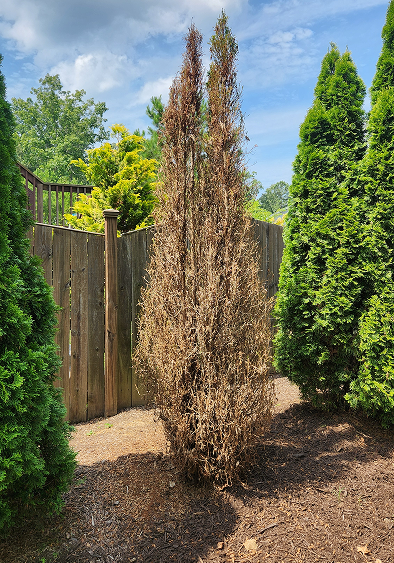
Watering is non-negotiable for the first two years after planting. A slow, deep soak twice a week is far better than a light daily sprinkle. If the interior of your tree is turning brown, it might just be natural "shedding," but if the tips of the branches are browning, it’s a cry for help—either too little water or a sign of transplant shock.
Pests and Problems to Watch For
Our warm, humid climate can unfortunately invite a few unwanted guests:
- Bagworms: These are the #1 enemy of the arborvitae. They create spindle-shaped "bags" out of silk and needles that hang like ornaments. If left unchecked, these caterpillars can strip a tree bare in a single season.
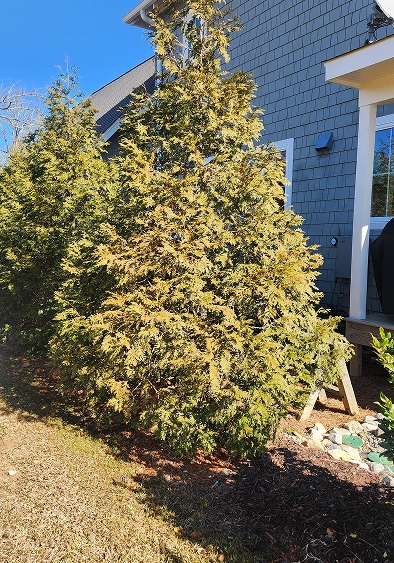
- Spider Mites: If your foliage starts to look dusty, gray, or bronzed, you might have a mite infestation. They thrive in hot, dry weather.
- Root Rot: In the heavy clay soils of the Midlands, poor drainage can lead to "wet feet," which rots the roots and causes the entire tree to wilt and die.
Professional Care for Peace of Mind
Arborvitae are a long-term investment in your property's value and your personal privacy. Because they are often planted in rows as a "living fence," a single sick tree can quickly spread disease to the rest of the line, leaving a literal gap in your privacy.
If you notice sudden browning, "bags" hanging from the branches, or thinning foliage, don't wait for the tree to turn completely orange. We highly recommend seeking the advice of a certified Arborist or a local Plant Health Care expert. They can provide professional-grade treatments for bagworms and mites, and ensure your "Green Giants" stay giant for years to come.
Search
Recent Posts
In the Midlands of South Carolina, where neighborhoods are growing and backyards feel closer…

Nothing says “South Carolina” quite like the waxy, deep-green leaves and dinner-plate-sized blooms of…

Mimosa trees (Albizia julibrissin) are cherished in South Carolina for their delicate, feathery leaves…

If you want to improve the health of your trees in the Midlands, forget…
- « Previous
- 1
- …
- 4
- 5
- 6