

When Green Turns Brown: A Midlands Homeowner’s Guide to Tree Stress

In the Midlands of South Carolina, we pride ourselves on our lush, green canopy. From the sprawling oaks of Shandon to the towering loblollies in Lexington, trees define our landscape. But when that vibrant green starts turning a crispy brown or a dull rust color out of season, it’s enough to make any homeowner worry.
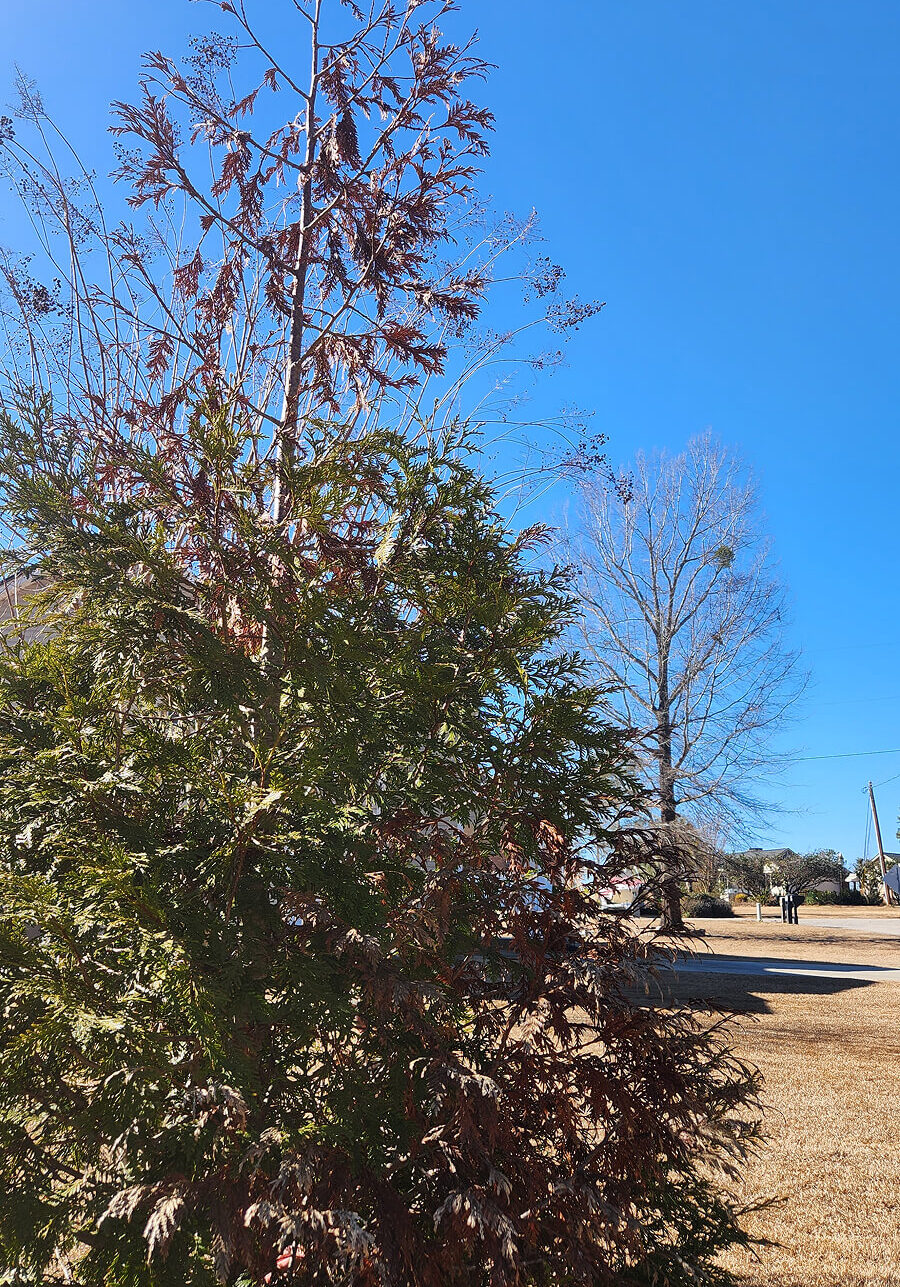
Browning leaves (on deciduous trees) or needles (on pines) is the tree’s way of screaming for help. In our unique Sandy Hills and Piedmont clay environment, the cause usually falls into one of three categories: environmental stress, seasonal biology, or active disease.

1. Leaf Scorch: The Midlands Summer Struggle
The most common culprit in our region is Leaf Scorch. This happens during those brutal July and August stretches when the thermometer hits 95°F and the rain disappears.
- What it looks like: The edges (margins) of the leaves turn brown and "crispy," while the area around the veins stays green.
- Why it happens: The tree is losing water through its leaves faster than the roots can pull it from our often-compacted soil. It’s essentially a localized dehydration.
2. The Pine "Brown-Up": Normal vs. Not
For homeowners with Loblolly or Longleaf pines, seeing brown needles can be terrifying. However, context is everything.
- The Seasonal Drop: Every fall, pines shed their oldest needles. If the needles closest to the trunk are turning brown while the tips stay green, congratulations—your tree is just doing its "fall cleaning."
- The Warning Sign: If the tips of the branches are browning, or if the browning is moving from the top of the tree downward, you likely have a problem. This could be anything from Pine Bark Beetles to Diplodia Tip Blight, both of which are common in South Carolina.
3. Fungal Foes: Anthracnose and Brown Spot
Our humid Midlands springs are the perfect breeding ground for fungi.
- Anthracnose: Often affects our Sycamores and Oaks. It causes irregular brown blotches and can lead to "premature defoliation," where the tree drops its leaves in May or June.
- Brown Spot Needle Blight: This specifically targets our pines, creating small brown spots with yellow halos on the needles.
How to Help Your Trees
Before you reach for the fertilizer (which can actually make scorch worse by forcing new growth the tree can't support), try these steps:
- The Finger Test: Dig 2–3 inches into the soil. If it’s bone-dry, give your tree a deep, slow soak at the dripline (the area directly under the outer edge of the branches).
- Mulch: Apply 3 inches of pine straw or wood chips around the base to hold in moisture—just keep it away from the actual trunk ("donuts, not volcanoes!").
- The Scratch Test: Use your fingernail to scratch a small twig. If it’s green underneath, there’s hope! If it’s brown and brittle, that branch is dead.
When to Call in the Pros
While some browning is just a tree’s reaction to a dry spell, other patterns—like "bleeding" bark, sawdust at the base, or rapid browning of the entire canopy—require professional intervention.
If you aren't sure whether your tree is just thirsty or truly dying, seek out an ISA Certified Arborist or a Plant Health Care expert. They have the diagnostic tools to identify specific pests and can often save a tree before it becomes a hazard to your home.
Search
Recent Posts

Arborvitaes, with their feathery foliage and evergreen charm, are a popular choice for landscaping.…

Your backyard oasis deserves to thrive, but sometimes, even the best intentions leave us…

Crape myrtles (Lagerstroemia) are the undisputed stars of summer landscapes, boasting vibrant blooms in…

The Dogwood, with its ethereal blooms and striking bark, embodies Southern charm. Despite the…

Spring Tree Diseases in South Carolina Spring in South Carolina is a time of…